
Case Summary: Damodar S. Prabhu v. Sayed Babalal H
In short
Two-judge SC bench (3 May 2010) held that §147 Negotiable Instruments Act enables compounding of §138 cheque-dishonour offences at any stage — magistrate, sessions, HC, or SC. Introduced a graded cost scheme: nil at first hearings, 10% before magistrate, 15% before sessions/HC, 20% before SC, payable to Legal Services Authority. Later SC judgment clarified these guidelines are not mandatory in every case.
In this brief
Background
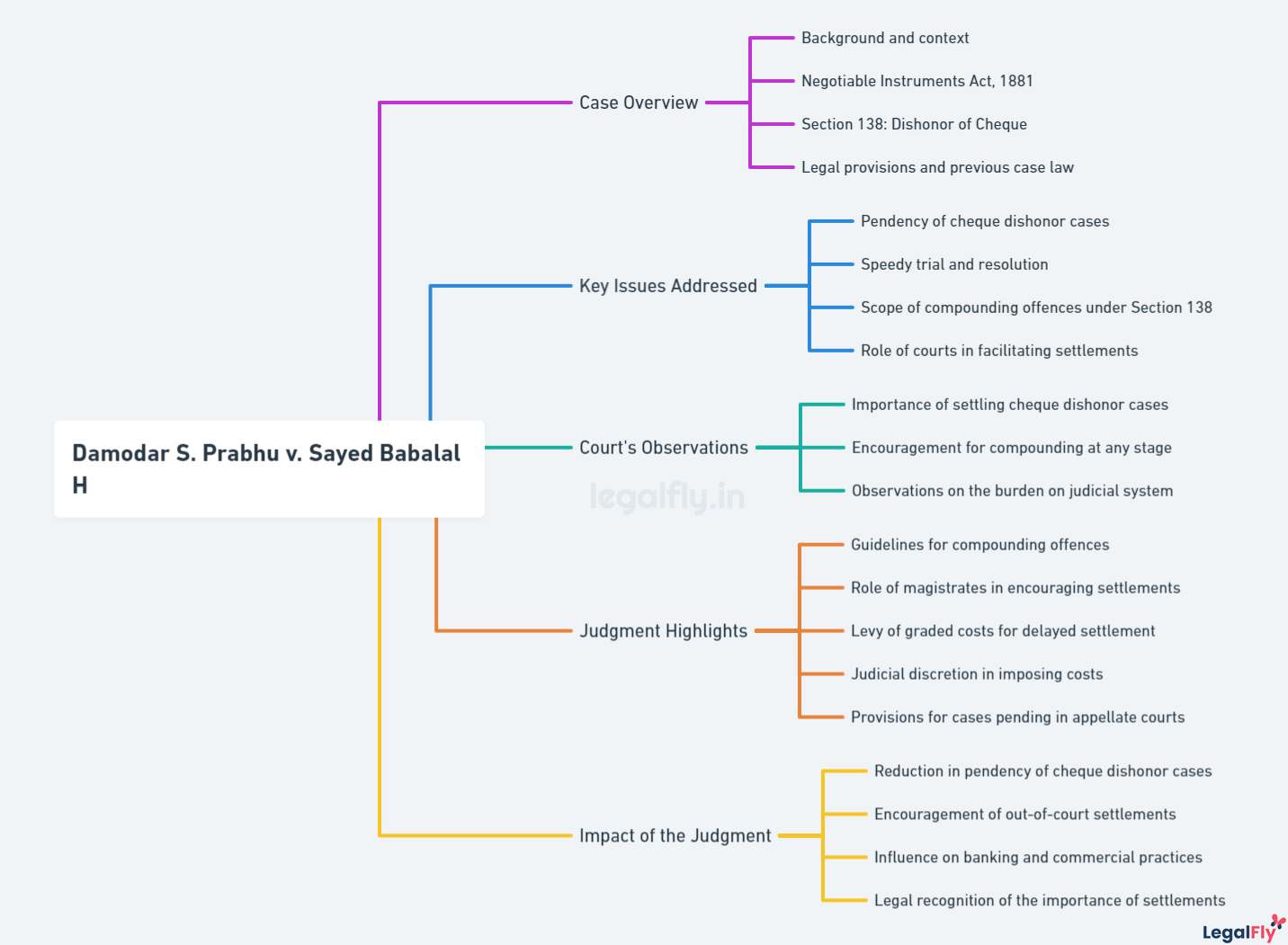
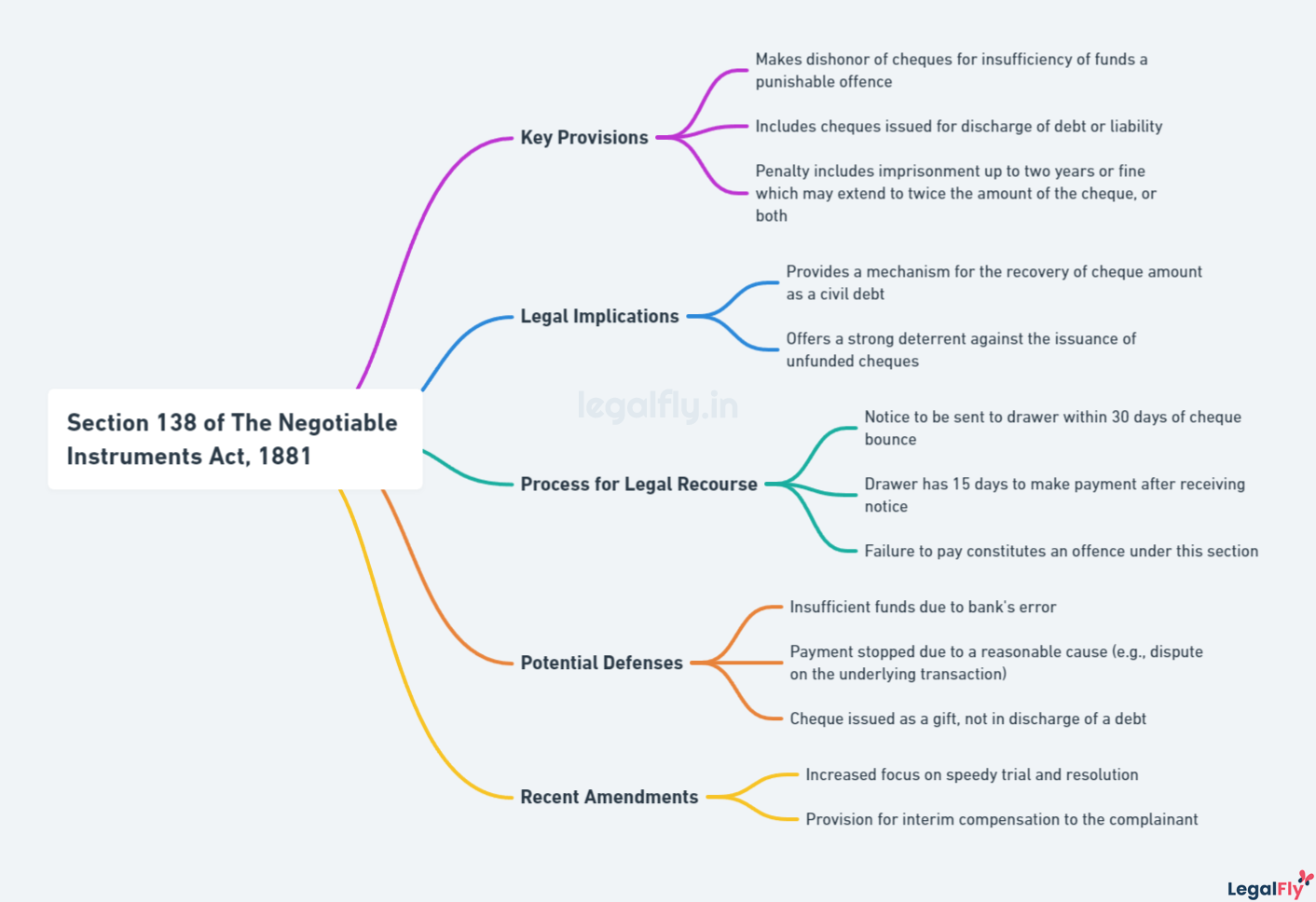
Damodar S. Prabhu sold a flat to Sayed Babalal H, who paid by instalments using several post-dated cheques. Five of those cheques were dishonoured on presentation due to insufficient funds. Damodar filed a criminal complaint under Section 138 of the Negotiable Instruments Act, 1881 (NI Act), which imposes criminal liability — up to two years' imprisonment plus a fine — for dishonour of a cheque issued in discharge of a legally enforceable debt.
The parties subsequently reached a settlement and, by the time the matter came before the Supreme Court, both sides were jointly seeking compounding of the offence under Section 147 of the NI Act. The case gave the Court an opportunity to clarify the law on compounding in cheque-dishonour cases and to issue guidelines to stem the enormous backlog of Section 138 cases clogging Indian courts.
Statutory Framework
Section 138, NI Act (inserted 1988) creates criminal liability for the drawer of a cheque that is dishonoured due to insufficient funds or an amount exceeding the bank arrangement, provided the cheque was issued for a legally enforceable debt and a 15-day demand notice was sent after dishonour.
Section 147, NI Act declares every offence under the Act to be compoundable. Section 320, CrPC (now Section 359, BNSS 2023) is the general compounding provision, but sub-section (9) bars compounding after conviction except for a narrow category of offences. The question was whether Section 147 NI Act overrides that bar.
Issues Before the Court
- Does Section 147 NI Act allow compounding of a Section 138 offence even after conviction, overriding CrPC Section 320(9)?
- At what stages can compounding be permitted, and should courts actively encourage it?
- Should costs be imposed to deter parties from delaying settlement and compounding only after prolonged litigation?
Judgment — 3 May 2010
The Supreme Court allowed the compounding, acquitted Sayed Babalal H, and laid down the following principles:
- Section 147 overrides CrPC Section 320(9). Because the NI Act contains its own compounding provision, the general bar on post-conviction compounding under the CrPC does not apply to Section 138 offences. Compounding is permissible at any stage: before the trial court, the sessions court, the High Court, or the Supreme Court.
- Consent of the complainant is essential. Courts cannot compel a complainant to compound; only the complainant can consent. But the Court can encourage and facilitate compounding.
- Repayment alone is not enough. Mere payment of the cheque amount does not entitle the accused to acquittal; the complainant's consent to compound is still required.
- Graded cost scheme to discourage delayed settlement (costs payable to the State Legal Services Authority):
- No cost — if compounded at the first or second hearing before the trial court
- 10% of cheque amount — if compounded at a later stage before the magistrate
- 15% — if compounded before the sessions court or the High Court
- 20% — if compounded before the Supreme Court
- Trial courts should prompt early compounding. On appearance of the accused, courts should inform parties of the option to compound and encourage them to settle.
Graded Cost Scheme at a Glance
| Stage of compounding | Cost (% of cheque amount) | Payable to |
|---|---|---|
| 1st or 2nd hearing (trial court) | Nil | — |
| Later stage before magistrate | 10% | State Legal Services Authority |
| Sessions court / High Court | 15% | State Legal Services Authority |
| Supreme Court | 20% | State Legal Services Authority |
Subsequent Developments
The graded cost guidelines from Damodar S. Prabhu have since been clarified as non-binding. The Supreme Court subsequently held that courts have discretion based on the facts of each case and are not obliged to impose costs in the proportions specified in the 2010 judgment; they may reduce or waive costs where parties settle amicably without delay.
BNSS 2023 update: From 1 July 2024, CrPC is replaced by the Bharatiya Nagarik Suraksha Sanhita (BNSS) 2023. CrPC §320 (compounding) → BNSS §359; CrPC §482 (inherent powers of HC to quash proceedings) → BNSS §528. The NI Act (and §§138, 147) itself remains unchanged.
Significance
- Declogging courts: Section 138 cases historically formed a substantial share of all criminal cases in India. The guidelines provided a structured route to early settlement, reducing court load.
- Clarification of §147 NI Act: Definitively settled that the NI Act's own compounding provision displaces the general CrPC bar — an important clarification for all personal-law-type criminal-but-civil-origin statutes.
- Balancing interests: The scheme preserves the complainant's right to refuse compounding while penalising tardiness — neither party can game the system by holding out for prolonged litigation.