
NALSA v. Union of India (2014)
In short
The Supreme Court recognised transgender persons as a third gender, held that the right to self-identify one's gender flows from Articles 14, 15, 19 and 21, and directed Central and State governments to frame welfare schemes and extend reservations to the transgender community.
In this brief
- Introduction
- Historical and Social Context
- The Status of Transgender People in Society
- Legal and Social Discrimination
- Constitutional Rights and the NALSA Judgment
- Fundamental Rights and the Constitution of India
- Role of the Yogyakarta Principles
- Key Directions of the Court
- Policies and Implementation
- Government Initiatives and Social Welfare Schemes
- Role of NGOs and Civil Society
- Challenges in Policy Execution
- The Transgender Persons (Protection of Rights) Act, 2019
- Educational and Employment Opportunities
- Reservations and Accessibility in Education
- Equality in Employment and Job Security
- Legal and Social Advocacy
- Legal Services and Support for Transgender Persons
- Prominent Activists and Related Cases
Introduction
On 15 April 2014, a two-judge bench of the Supreme Court of India comprising Justice K.S. Radhakrishnan and Justice A.K. Sikri delivered a unanimous verdict in National Legal Services Authority v. Union of India, [(2014) 5 SCC 438], recognising transgender persons as a third gender under Indian law. Justice Sikri also wrote a separate concurring opinion elaborating on the constitutional basis.
The petition was filed by the National Legal Services Authority (NALSA) — the statutory body constituted under the Legal Services Authorities Act, 1987, mandated to provide free legal aid and promote access to justice. NALSA approached the Supreme Court seeking directions to the Union of India to recognise the identity of transgender persons and protect their fundamental rights. A companion writ petition was filed by Laxmi Narayan Tripathi, a well-known Hijra activist, and others.
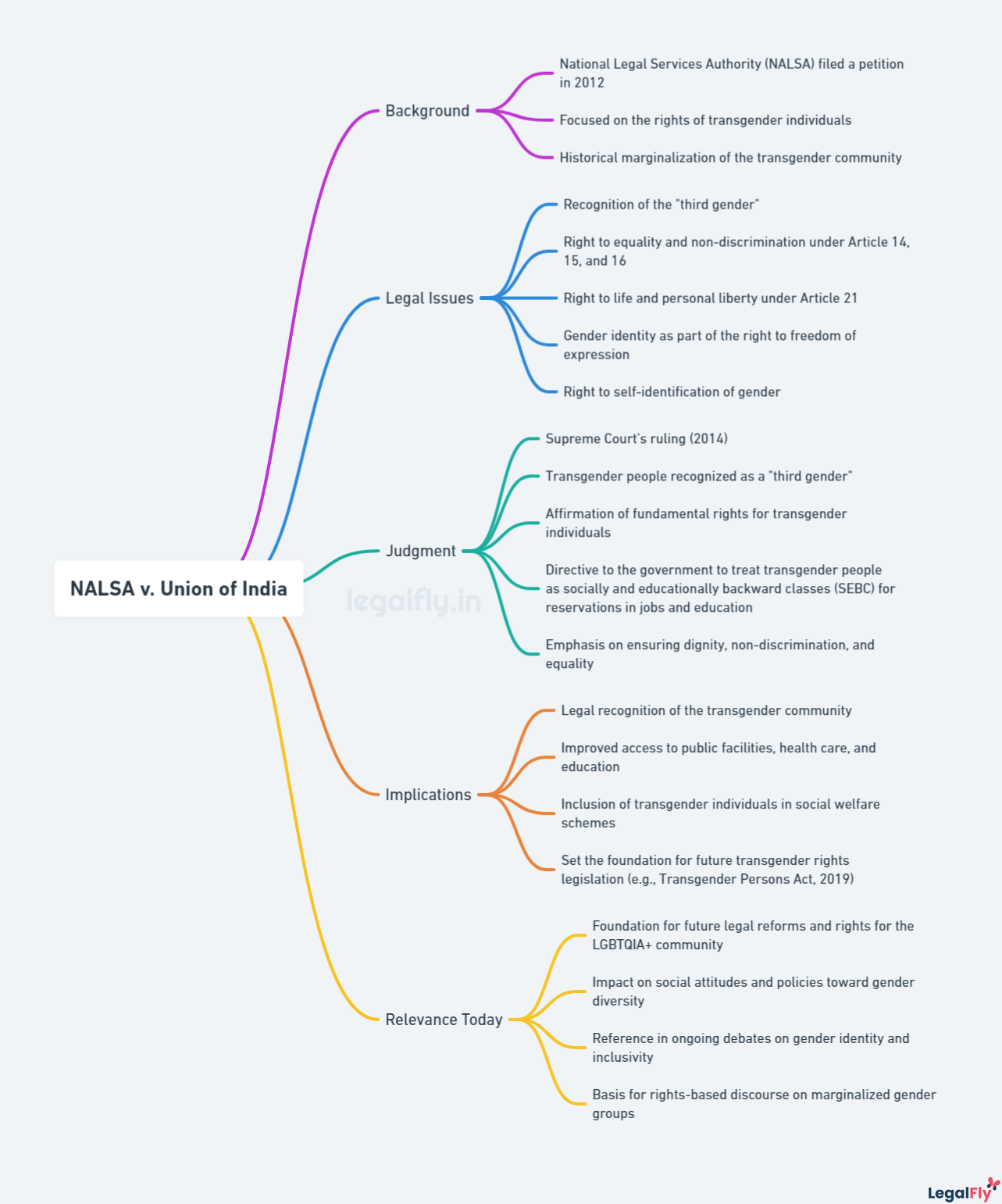
The judgment affirmed that the fundamental rights guaranteed under Articles 14, 15, 16, 19(1)(a) and 21 of the Constitution of India extend equally to transgender persons. It held that the right to self-identify one's gender — without mandatory medical or surgical procedures — is an integral component of the right to life and personal liberty under Article 21, and of the right to freedom of expression under Article 19(1)(a).
Historical and Social Context
The Status of Transgender People in Society
Transgender persons in India — including Hijras, Kinnars, Aravanis, Jogtas, and others — have existed for centuries. Historical records from the Mughal era show that Hijras held trusted and respected roles in royal courts. This recognition eroded sharply under colonial rule.
The Criminal Tribes Act, 1871 — a colonial-era statute — notoriously classified the Hijra community as a "criminal tribe," criminalising their very existence and subjecting them to police surveillance. Although the Act was repealed in 1952, its legacy persisted in state-level "eunuch registers" maintained under several police acts, and in the misuse of Section 377 of the Indian Penal Code (now repealed) against transgender persons.
By the time NALSA reached the Supreme Court, the transgender community faced systemic exclusion from education, healthcare, and formal employment. Many were forced into begging (badhai) or sex work. Discrimination was structural, not incidental.
Legal and Social Discrimination
Before the NALSA judgment, Indian law offered no formal recognition of a gender category beyond male and female. Government documents — identity cards, ration cards, passports, voter IDs — required binary gender classification, effectively rendering transgender persons invisible to the state. Courts, hospitals, and schools routinely turned them away. The absence of legal identity was itself a form of violence.
Constitutional Rights and the NALSA Judgment
Fundamental Rights and the Constitution of India
The Constitution of India guarantees a cluster of fundamental rights to every person — citizen or otherwise. The Court in NALSA engaged with the following provisions:
- Article 14 — Equality before law and equal protection of the laws.
- Article 15 — Prohibition of discrimination on grounds of religion, race, caste, sex, or place of birth. The Court read "sex" broadly to include gender identity.
- Article 16 — Equality of opportunity in matters of public employment.
- Article 19(1)(a) — Right to freedom of expression, which the Court held includes the right to express one's gender identity through dress, words, actions, and behaviour.
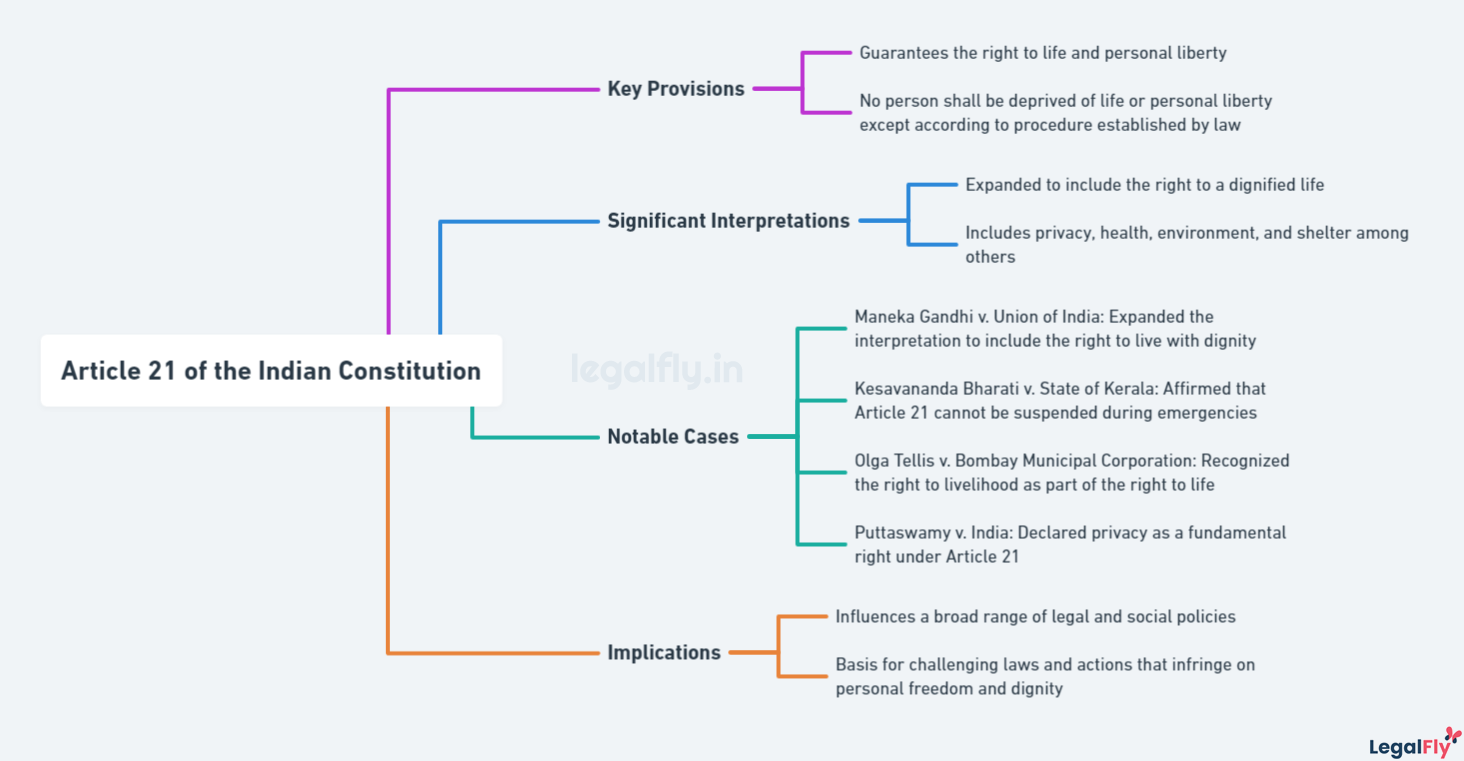
- Article 21 — Right to life and personal liberty, which encompasses the right to dignity, the right to choose one's gender identity, and the right to be free from arbitrary state interference in personal decisions.
Role of the Yogyakarta Principles
A notable feature of the NALSA judgment is its extensive reliance on international human rights instruments and the Yogyakarta Principles. The Principles — adopted in November 2006 by a group of international human rights experts at Gadjah Mada University, Indonesia — set out how international human rights law applies to questions of sexual orientation and gender identity.
The Court used the Yogyakarta Principles alongside ICCPR, ICESCR, and other treaties to fill gaps in domestic law and to ground the right to gender identity in established human rights norms. This approach — reading constitutional rights in light of international obligations — is a well-accepted technique in Indian constitutional jurisprudence (Vishaka v. State of Rajasthan, AIR 1997 SC 3011 being an earlier example).
Key Directions of the Court
The Supreme Court issued comprehensive directions to the Central and State Governments. These are the operative directions of the judgment:
| # | Direction |
|---|---|
| 1 | Hijras, eunuchs, and all transgender persons shall be recognised as a third gender for the purpose of safeguarding their rights under Part III of the Constitution and laws made by Parliament and State Legislatures. |
| 2 | Transgender persons have the right to self-identify their gender as male, female, or third gender. Governments shall grant legal recognition of such self-identified gender identity. |
| 3 | Transgender persons shall be treated as socially and educationally backward classes and shall be entitled to reservations in educational institutions and public employment. |
| 4 | Central and State Governments shall take steps to provide medical care to transgender persons in hospitals and operate separate HIV/sero-surveillance centres for the transgender community. |
| 5 | Separate public toilets and other necessary facilities shall be provided for transgender persons. |
| 6 | Governments shall take steps to frame social welfare schemes for the transgender community and address issues of stigma, social pressure, depression, and suicidal tendencies. |
| 7 | Governments shall take steps to create public awareness to integrate transgender persons into mainstream society and end the practice of treating them as untouchables. |
| 8 | Insisting on Sex Reassignment Surgery (SRS) as a prerequisite for changing one's gender in official documents is illegal. |
| 9 | Central and State Governments shall seriously address problems such as fear, shame, gender dysphoria, and social stigma faced by transgender persons. |
Policies and Implementation
Government Initiatives and Social Welfare Schemes
Following the NALSA judgment, the Ministry of Social Justice and Empowerment introduced several programmes for the transgender community: vocational training, housing support, and the National Portal for Transgender Persons. Several State Governments — Tamil Nadu, Kerala, and West Bengal among the earliest — developed their own transgender welfare boards and schemes.
Role of NGOs and Civil Society
Non-governmental organisations played an indispensable role in translating the judgment into ground-level change. Organisations like the Humsafar Trust (Mumbai), Sangama (Karnataka), and Sahodari Foundation (Tamil Nadu) provided legal aid, counselling, and livelihood support. Activists such as Grace Banu (Tamil Nadu) and Vyjayanti Vasanta Mogli (Telangana) continued pushing for full implementation of the Court's directions — and for legislative reform in line with NALSA's spirit.
Challenges in Policy Execution
Implementation has been uneven. Many States failed to constitute transgender welfare boards within the timelines directed. Identity documents — especially Aadhaar and voter IDs — remained difficult to update without bureaucratic resistance. The NALSA judgment was aspirational in important respects; converting its directions into enforceable entitlements required further litigation and legislative action.
The Transgender Persons (Protection of Rights) Act, 2019
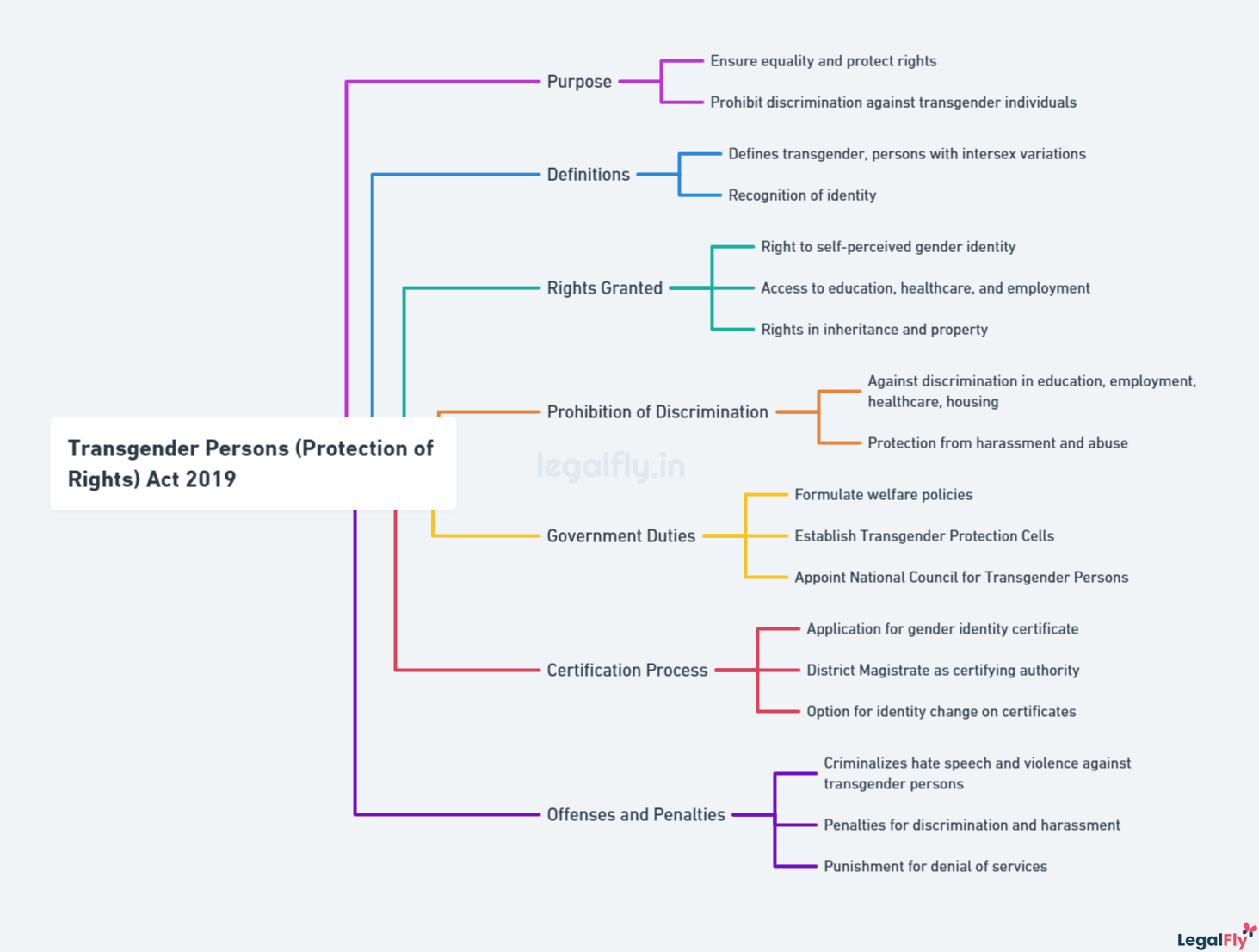
Five years after NALSA, Parliament enacted the Transgender Persons (Protection of Rights) Act, 2019, which came into force on 10 January 2020. The Act created a statutory framework for the legal recognition of transgender persons and prohibited discrimination in education, employment, healthcare, and housing.
However, the Act attracted significant criticism from transgender rights activists and legal scholars on multiple grounds:
| NALSA (2014) — What the Court Directed | Transgender Persons Act, 2019 — What Parliament Enacted |
|---|---|
| Right to self-identify gender as male, female, or third gender without medical procedures | Section 4 nominally upholds self-perception; but Sections 5 & 6 require application to the District Magistrate for a certificate of identity — outsourcing gender identity to the State |
| SRS as a pre-condition for legal gender change is illegal | Section 7: To be legally recognised as male or female (not merely "transgender"), the person must provide proof of gender-affirmative surgery |
| Transgender persons are entitled to reservations in education and public employment | The Act omits reservations entirely — leaving the NALSA direction on backward-class treatment unimplemented |
| Equal protection against violence | Penalties for offences against transgender persons (up to 2 years, Section 18) are lower than equivalent offences against cisgender persons |
The 2019 Act has been challenged before the Supreme Court (Swati Bidhan Baruah v. Union of India and related petitions), with activists arguing that it regresses from NALSA's vision rather than codifying it. As of 2026, these challenges remain pending.
Educational and Employment Opportunities
Reservations and Accessibility in Education
The NALSA judgment directed that transgender persons be treated as socially and educationally backward classes, making them eligible for reservations in educational institutions akin to OBC/SC/ST reservations. Several State Governments acted on this: Tamil Nadu, for instance, included transgender persons in the OBC category for reservation purposes.
At the institutional level, universities began introducing gender-neutral forms and inclusive hostel policies, though progress has been inconsistent across States.
Equality in Employment and Job Security
The judgment's direction on employment reservations in government jobs has been acted upon in some States but not at the Central level. The 2019 Act prohibits employment discrimination but does not mandate reservations. This gap — between NALSA's direction and the statutory framework — remains an active area of litigation and advocacy.
Legal and Social Advocacy
Legal Services and Support for Transgender Persons
NALSA itself — as the petitioner in this case — has a statutory mandate under the Legal Services Authorities Act to provide free legal services to weaker sections of society. Post-judgment, NALSA and State Legal Services Authorities have conducted awareness campaigns, facilitated document correction, and provided legal representation to transgender persons in matters of identity documentation and discrimination.
Prominent Activists and Related Cases
Laxmi Narayan Tripathi, who appeared before the Court in NALSA as a petitioner/intervenor representing the Hijra community, became a prominent voice in subsequent advocacy for implementation. Grace Banu (Tamil Nadu) has fought for inclusion of transgender persons in Dalit reservations. Vyjayanti Vasanta Mogli (Telangana) has engaged both judicial processes and electoral politics to advance transgender rights. Advocate Jayna Kothari has argued several landmark cases on transgender and gender-minority rights before constitutional courts.
NALSA itself has been cited extensively in subsequent judgments — including Justice K.S. Puttaswamy v. Union of India (2017) 10 SCC 1 (the right to privacy case), which affirmed sexual orientation and gender identity as components of the constitutional right to privacy under Article 21.