
Case Summary: Sushil Kumar Sharma v. Union of India 2005

In short
Two-judge bench (Pasayat & Sema JJ.) upheld §498A IPC as constitutional on 19 July 2005; mere possibility of misuse does not invalidate a law. Issued the "watchdog, not bloodhound" standard for investigating agencies. §498A is now BNS §85.
In this brief
Overview
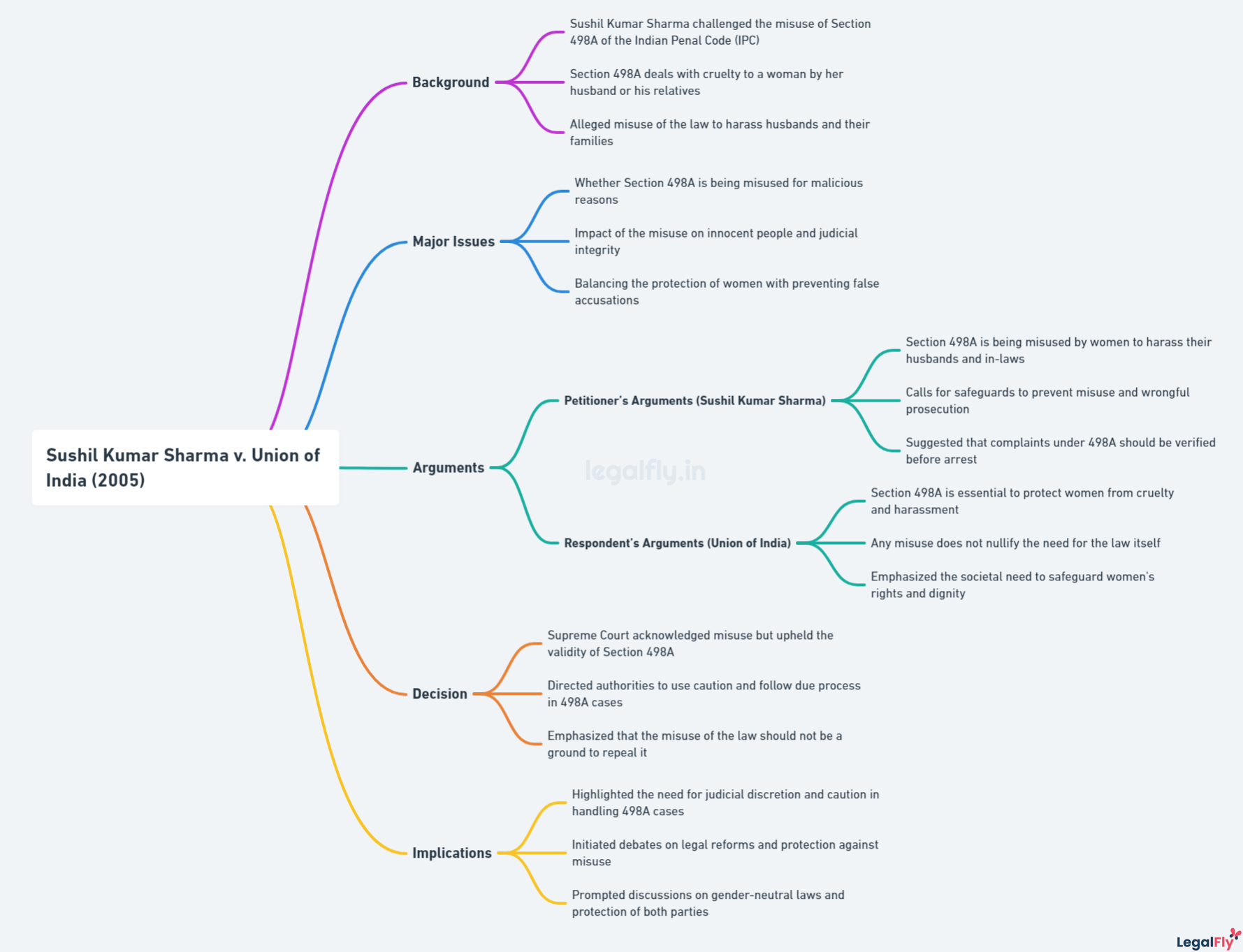
Sushil Kumar Sharma v. Union of India, AIR 2005 SC 3100, is the Supreme Court's definitive ruling on the constitutional validity of Section 498A of the Indian Penal Code — the provision that criminalises cruelty by a husband or his relatives against a married woman. The Court upheld §498A as intra vires the Constitution while cautioning that the possibility of misuse cannot be a ground to strike down social-protection legislation.
Background and Context
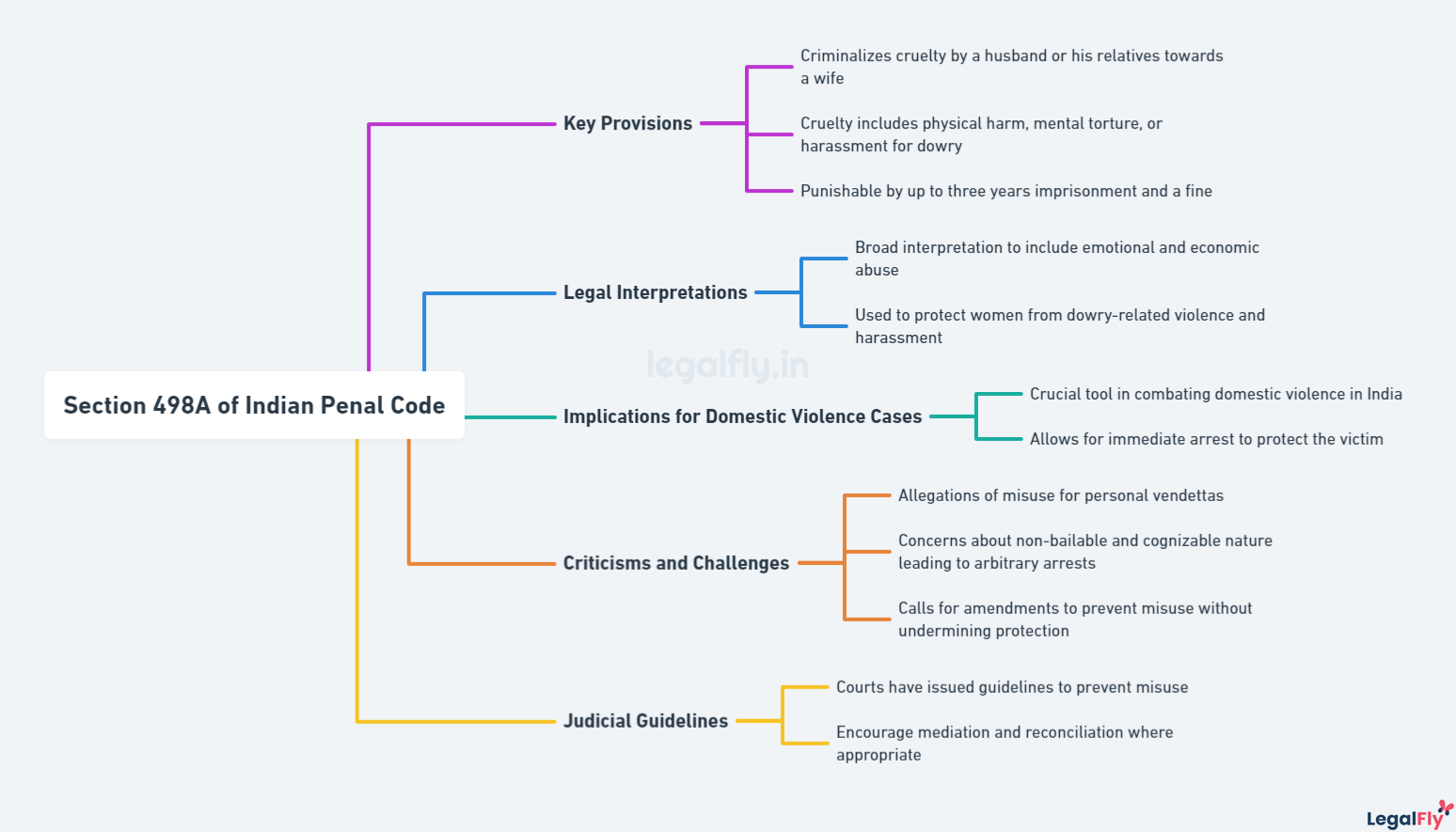
Section 498A was inserted into the IPC in 1983 to provide an effective deterrent against dowry harassment and domestic cruelty. It is a cognisable and non-bailable offence carrying up to three years' imprisonment plus fine. Because arrest can follow immediately on a complaint, concerns grew over the years that the section was being weaponised to harass husbands and extended family members through false complaints.
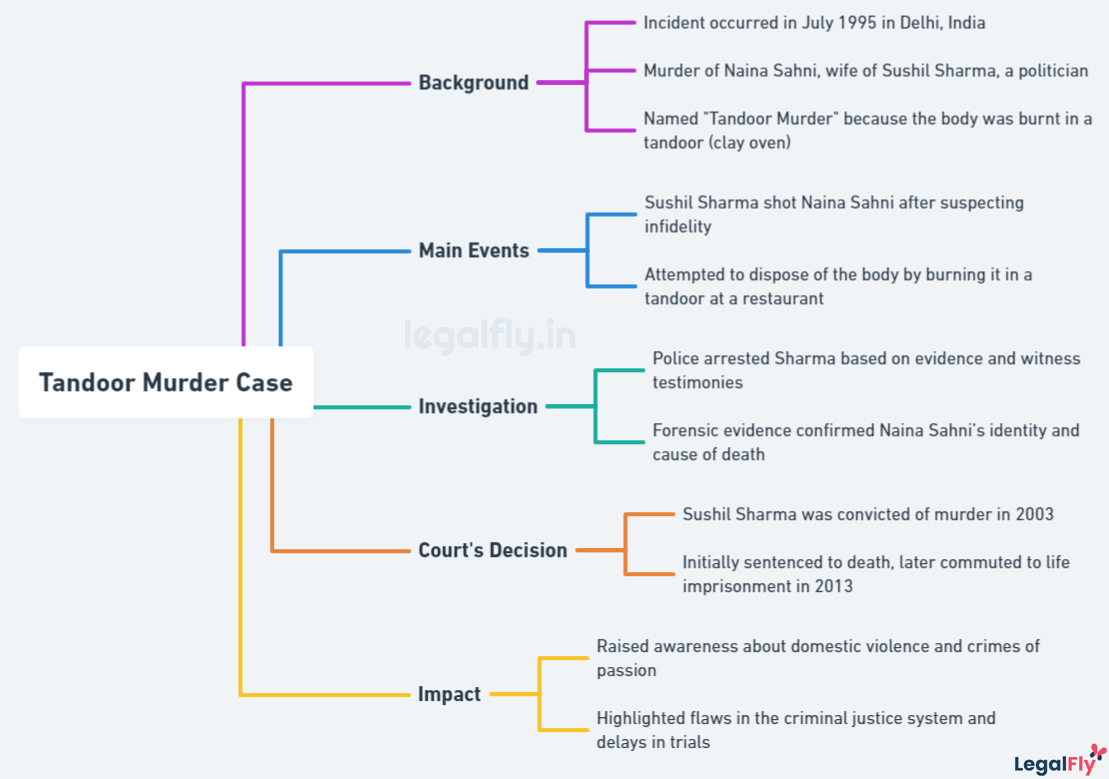
Sushil Kumar Sharma — who had been convicted under Section 302 IPC in connection with the 1995 Tandoor Murder case in Delhi — filed Writ Petition (Civil) No. 141 of 2005 under Article 32 of the Constitution. His prayer was either a declaration that §498A was unconstitutional and ultra vires, or, alternatively, court-formulated guidelines to prevent innocent persons from being victimised by false accusations.
Key Facts at a Glance
| Aspect | Detail |
|---|---|
| Full citation | AIR 2005 SC 3100 |
| Writ Petition | W.P. (C) No. 141 of 2005 |
| Date of judgment | 19 July 2005 |
| Bench | Justice Arijit Pasayat + Justice H.K. Sema |
| Filed under | Article 32, Constitution of India |
| Provision challenged | Section 498A IPC (cruelty by husband/relatives) |
| Constitutional articles invoked | Arts 14, 19, 21 |
| Holding | §498A upheld as constitutional; petition dismissed |
Legal Issues Addressed
Constitutional Validity of §498A
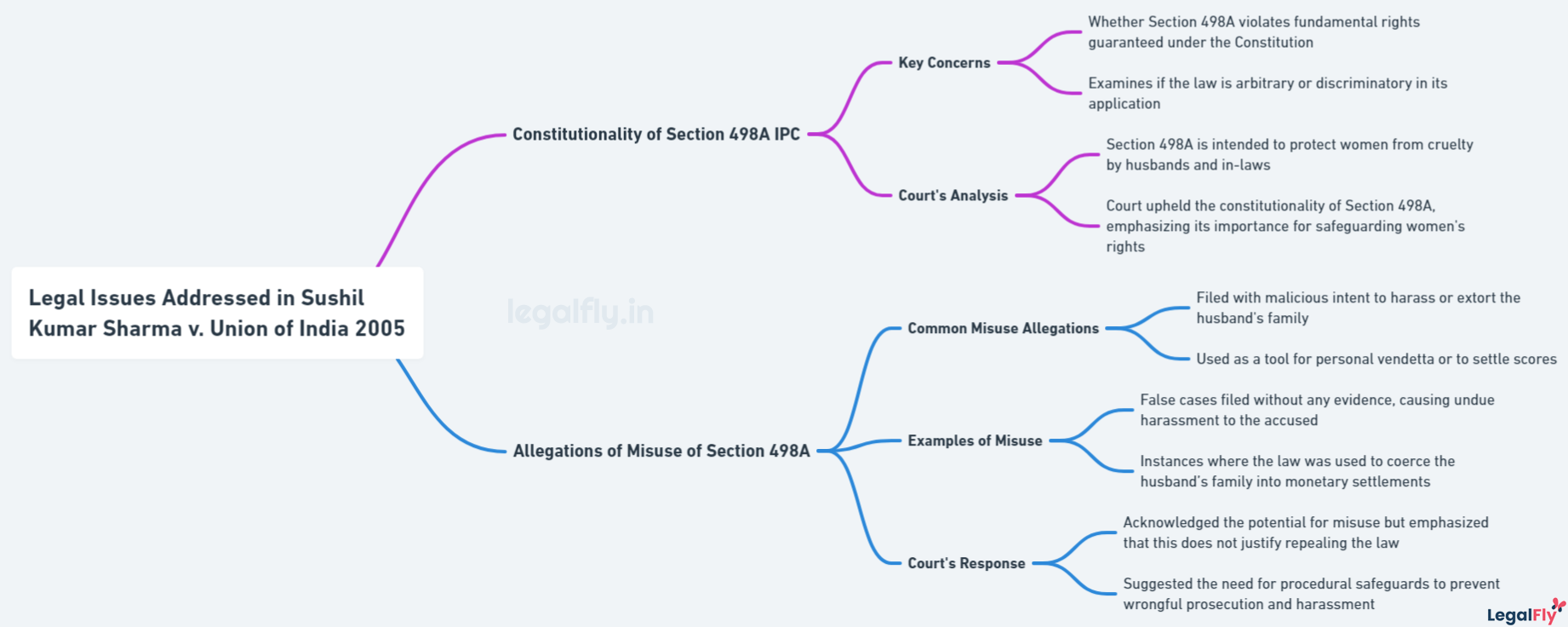
The petitioner argued that §498A violated Articles 14, 19 and 21 of the Constitution:
- Art 14: The section is arbitrary and vague, enabling arrests on unverified complaints and thus failing the test of reasonable classification.
- Art 21: The cognisable and non-bailable nature of the offence deprives accused persons of liberty without adequate procedural safeguard, since a complaint alone triggers arrest.
- Art 19: The chilling effect of potential arrest curtails personal freedom disproportionately.
Allegations of Misuse of §498A
The petition highlighted high acquittal rates in §498A trials as evidence of widespread false complaints. It was argued that estranged spouses exploited the automatic-arrest feature to pressure husbands and extended family — often in matrimonial disputes unrelated to genuine dowry cruelty.
Arguments Presented
Petitioner (Sushil Kumar Sharma): §498A is unconstitutional because it allows arrest based solely on an unverified complaint. The breadth of "relatives" covered by the section means distant family members face arrest on bare allegations, violating the right to equality and personal liberty.
Respondent (Union of India): §498A was enacted as a special measure to protect women — a class requiring legislative protection under Article 15(3). The possibility of misuse by a minority cannot invalidate a law that serves a genuine and serious social purpose. Existing procedural law provides adequate safeguards against abuse.
Supreme Court's Decision
The bench upheld the constitutional validity of §498A and dismissed the writ petition. The key propositions:
- Misuse ≠ unconstitutionality: "Merely because the provision is constitutional and intra vires does not give a licence to unscrupulous persons to wreck personal vendetta." The mere possibility that a law may be misused is not a ground to strike it down.
- Watchdog, not bloodhound: Investigating agencies and courts must act as a watchdog, not a bloodhound — their effort should be to ensure that an innocent person is not made to suffer on account of unfounded, baseless and malicious allegations.
- Legislature's domain: If §498A requires amendment to address genuine concerns about misuse, that is a matter for Parliament — not for the Court to rewrite a law by judicial fiat.
The Court issued no mandatory procedural guidelines in this judgment. It disposed of the petition by reaffirming that constitutionality turns on facial validity — and §498A passes that test.
Implications and Later Developments
Sushil Kumar Sharma (2005) settled §498A's constitutional footing. The misuse debate, however, continued through subsequent litigation — ultimately producing the operative procedural framework in force today:
| Case / Development | What it added |
|---|---|
| Arnesh Kumar v. State of Bihar (2014) 8 SCC 273 | Police must apply their mind before arresting in §498A cases; Magistrates must record reasons before remanding. Issued a checklist for investigating officers to prevent automatic arrest. |
| Rajesh Sharma v. State of UP (2017) 11 SCC 444 | Created Family Welfare Committees to review complaints before arrest — a controversial intervention. |
| Social Action Forum v. Union of India (2018) 10 SCC 443 | Scrapped the FWC mechanism — held it had no statutory basis and conflicted with legislative policy. Restored Arnesh Kumar guidelines as the operative framework. |
| BNS 2023 (in force 1 July 2024) | §498A IPC re-enacted as BNS §85 (cruelty by husband or relatives; same 3-year maximum + fine; still cognisable, non-bailable); definition of cruelty → BNS §86. |
BNS 2023 — Current Law
The Bharatiya Nyaya Sanhita 2023, which replaced the IPC with effect from 1 July 2024, re-enacts the cruelty provision without substantive change:
- BNS §85 (= old IPC §498A): Cruelty by husband or his relatives — punishable with imprisonment up to three years and fine. Cognisable; non-bailable.
- BNS §86: Defines "cruelty" — (a) wilful conduct likely to drive a woman to suicide or cause grave physical or mental injury; (b) harassment to coerce her or her relatives to meet an unlawful demand for property or valuable security.
The ratio of Sushil Kumar Sharma — that constitutionality cannot be challenged solely on misuse grounds — applies with equal force to BNS §85.
Conclusion
Sushil Kumar Sharma v. Union of India (AIR 2005 SC 3100) is the anchor precedent for the proposition that §498A IPC — now BNS §85 — is constitutionally valid. It simultaneously introduced the "watchdog, not bloodhound" standard that binds investigating agencies. The judgment did not resolve the misuse debate: that remained live through Arnesh Kumar (2014) and Social Action Forum (2018), which together now form the operative procedural framework for BNS §85 complaints.