
M.C. Mehta v. Union of India (Oleum Gas Leak, 1987): Case Summary
In short
M.C. Mehta v. Union of India (1987), the "Oleum Gas Leak" case, is where the Supreme Court created the rule of absolute liability. After oleum gas leaked from Shriram Food and Fertilizers' Delhi plant — just months after the Bhopal disaster — the Court held that an enterprise carrying on a hazardous activity is absolutely liable for any harm if a dangerous substance escapes, with none of the exceptions allowed under the older strict-liability rule, and that compensation must reflect the enterprise's size to deter wrongdoing.
In this brief
- Introduction
- Background of the Case
- The Incident at Shriram Food and Fertilizers
- M.C. Mehta's Public Interest Litigation
- Key Issues
- The Arguments
- The Judgment
- The Doctrine of Absolute Liability
- Epistolary Jurisdiction and Article 32
- Article 21 and the Right to a Healthy Environment
- Public Liability Insurance Act, 1991
- Later Application of the Doctrine
- Oleum vs. Bhopal: A Common Confusion
- Conclusion
Introduction
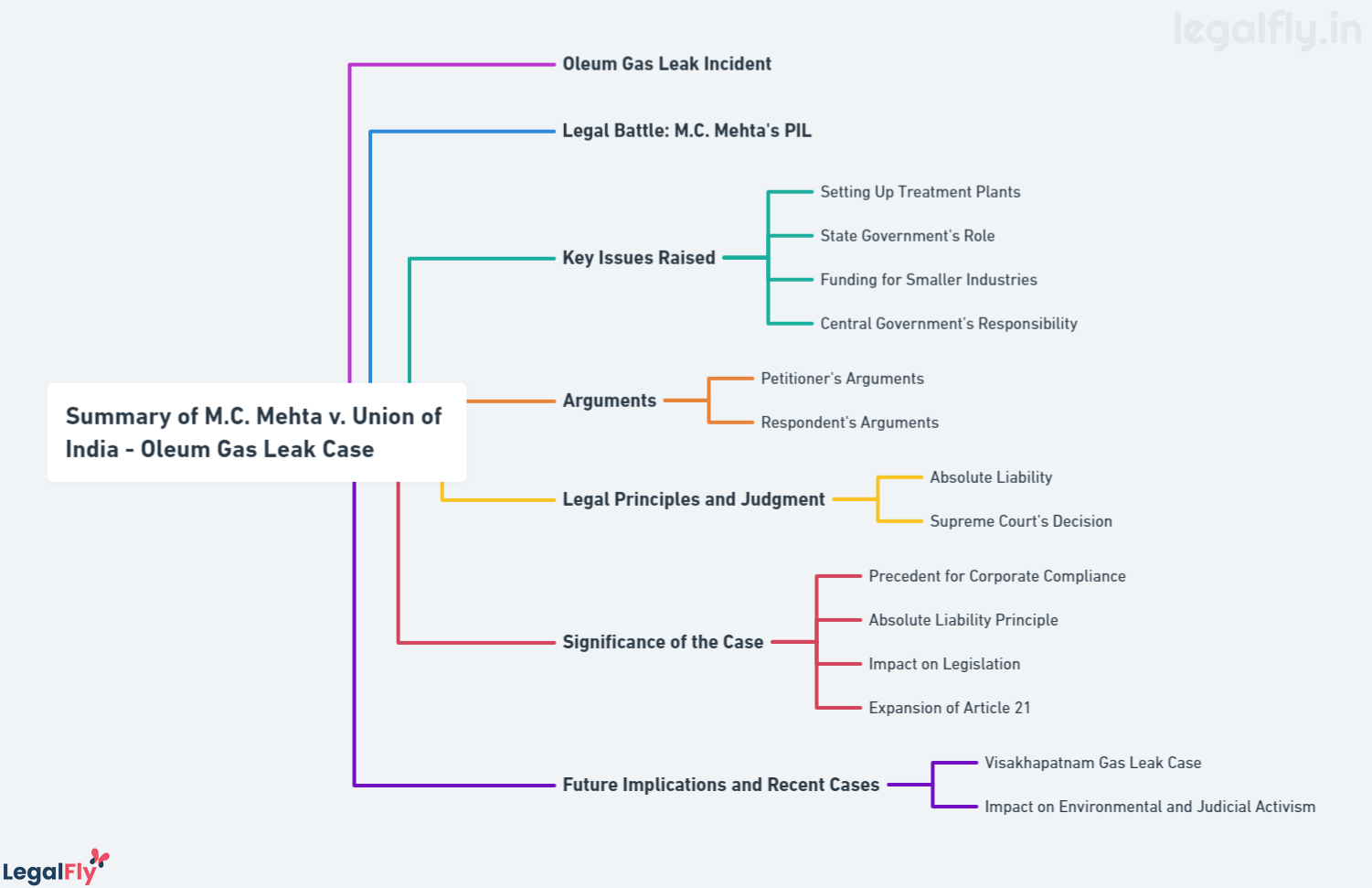
M.C. Mehta v. Union of India — the Oleum Gas Leak case (1987) — is one of the most important decisions in Indian tort and environmental law. Arising from a toxic gas leak at a Delhi factory just a year after the Bhopal disaster, it is the case in which the Supreme Court, led by Chief Justice P.N. Bhagwati, created the new doctrine of absolute liability for enterprises engaged in hazardous activities.
| Element | Detail |
|---|---|
| Case | M.C. Mehta v. Union of India (Oleum Gas Leak) |
| Citation | (1987) 1 SCC 395; AIR 1987 SC 1086 |
| Court / Bench | Supreme Court of India — 5-judge Constitution Bench (Bhagwati C.J.) |
| Decided | 20 December 1986 (reported 1987) |
| Industry | Shriram Foods and Fertilizer Industries, Kirti Nagar, Delhi |
| Key contribution | The doctrine of absolute liability; expanded Article 32 remedies |
Background of the Case
The Incident at Shriram Food and Fertilizers
Shriram Foods and Fertilizer Industries — a unit of Delhi Cloth Mills (DCM) — ran a caustic chlorine and sulphuric-acid plant in the densely populated locality of Kirti Nagar, Delhi. On 4 December 1985, a large quantity of oleum gas (fuming sulphuric acid vapour) escaped from one of its units, spreading through the surrounding neighbourhood and causing widespread alarm and injury; the leak was said to have contributed to the death of an advocate. A second, smaller leak followed on 6 December 1985. Coming barely a year after the Bhopal gas tragedy (December 1984), the incident crystallised public fear about hazardous industries operating near homes.
M.C. Mehta's Public Interest Litigation
The environmental lawyer M.C. Mehta had already filed a public interest litigation under Article 32 seeking the closure and relocation of hazardous industries in Delhi. After the leak, the Court had to decide whether Shriram could reopen, on what conditions, and — most importantly — what principles of liability should govern harm caused by such enterprises.
Key Issues
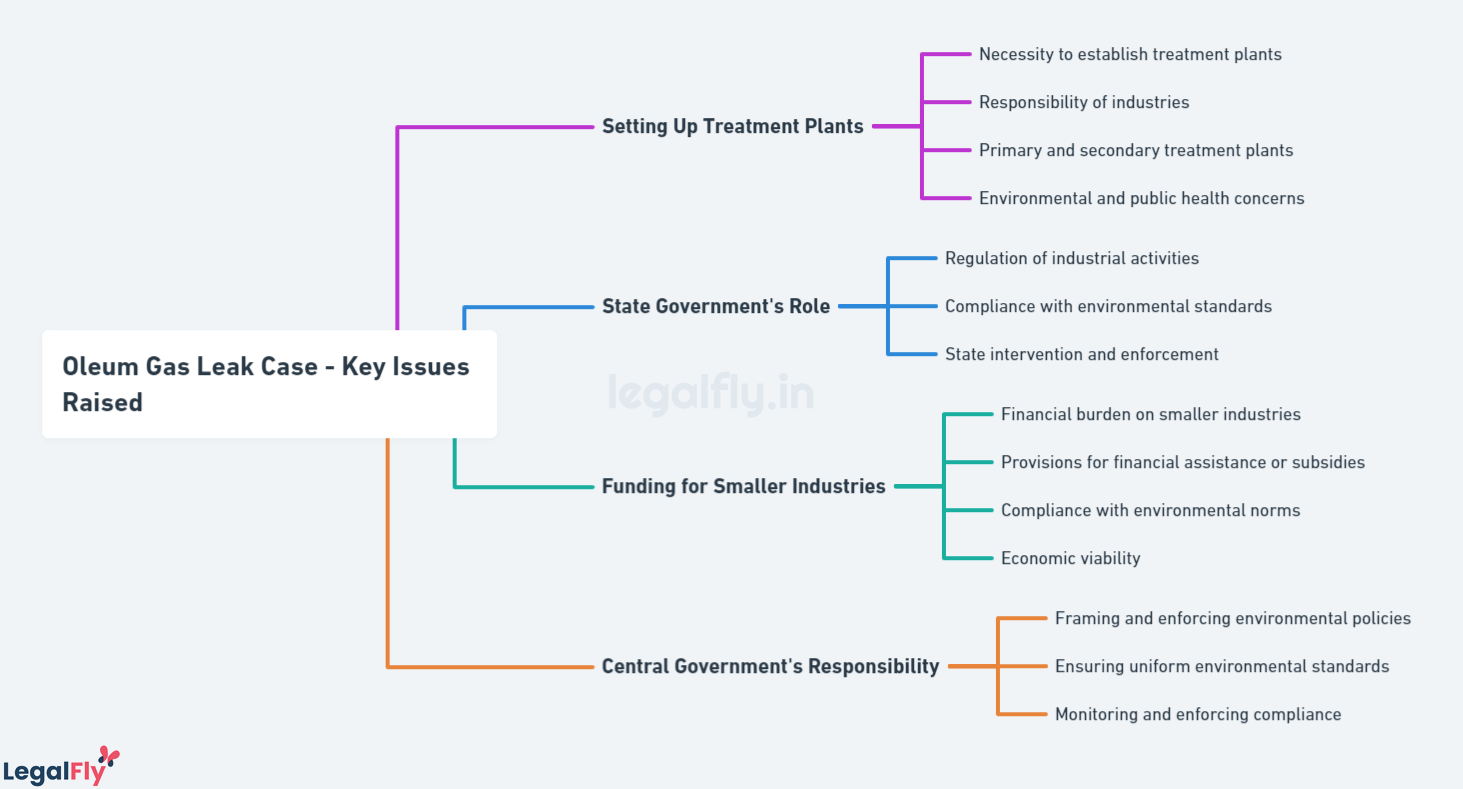
- Should the caustic chlorine plant be permitted to restart, and under what safety conditions?
- What is the basis and extent of an enterprise's liability for harm caused by an escape of a hazardous substance — does the old rule of strict liability (with its exceptions) apply, or something stricter?
- How far can the Supreme Court go under Article 32 — can it award compensation and fashion new remedies for the violation of fundamental rights?
- Is a private company carrying on a hazardous activity "State" under Article 12, so as to be bound by Article 21?
The Arguments
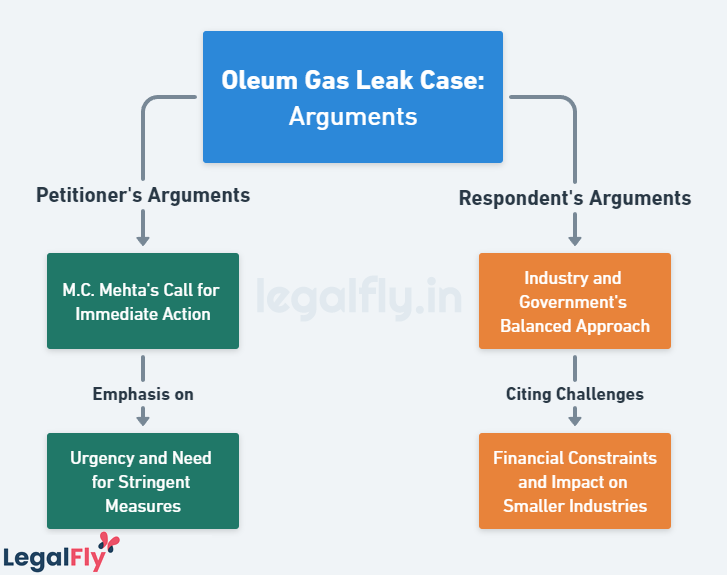
M.C. Mehta argued that an industry handling dangerous chemicals in a crowded area posed an intolerable risk and should be relocated, and that the company must bear full responsibility for the harm caused. Shriram resisted closure on grounds of livelihoods and economic value, and contended that liability, if any, should follow the conventional rule in Rylands v. Fletcher — under which an enterprise could escape liability through recognised exceptions (act of God, act of a stranger, the victim's own fault, etc.).
The Judgment
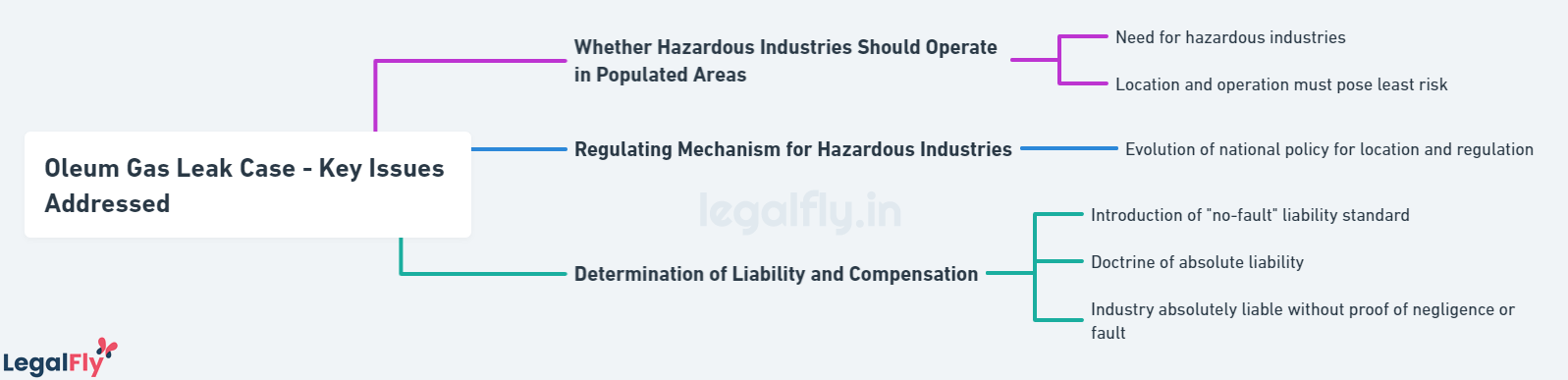
The Court permitted Shriram to resume operations, but only subject to stringent safety conditions and ongoing supervision. The lasting importance of the case, however, lies in three holdings:
- A new rule of absolute liability. The Court refused to be bound by the 19th-century English rule of strict liability and its exceptions, which it considered unsuited to modern industrial India.
- Compensation linked to the enterprise's capacity. Damages must be correlated to the magnitude and prosperity of the enterprise, so that they have a real deterrent effect — the larger the enterprise, the larger the liability.
- An expansive Article 32. The Court held that under Article 32 it can not only enforce fundamental rights but also forge new remedies and award compensation for their violation. (It left open the question whether Shriram was "State" under Article 12.)
The Doctrine of Absolute Liability
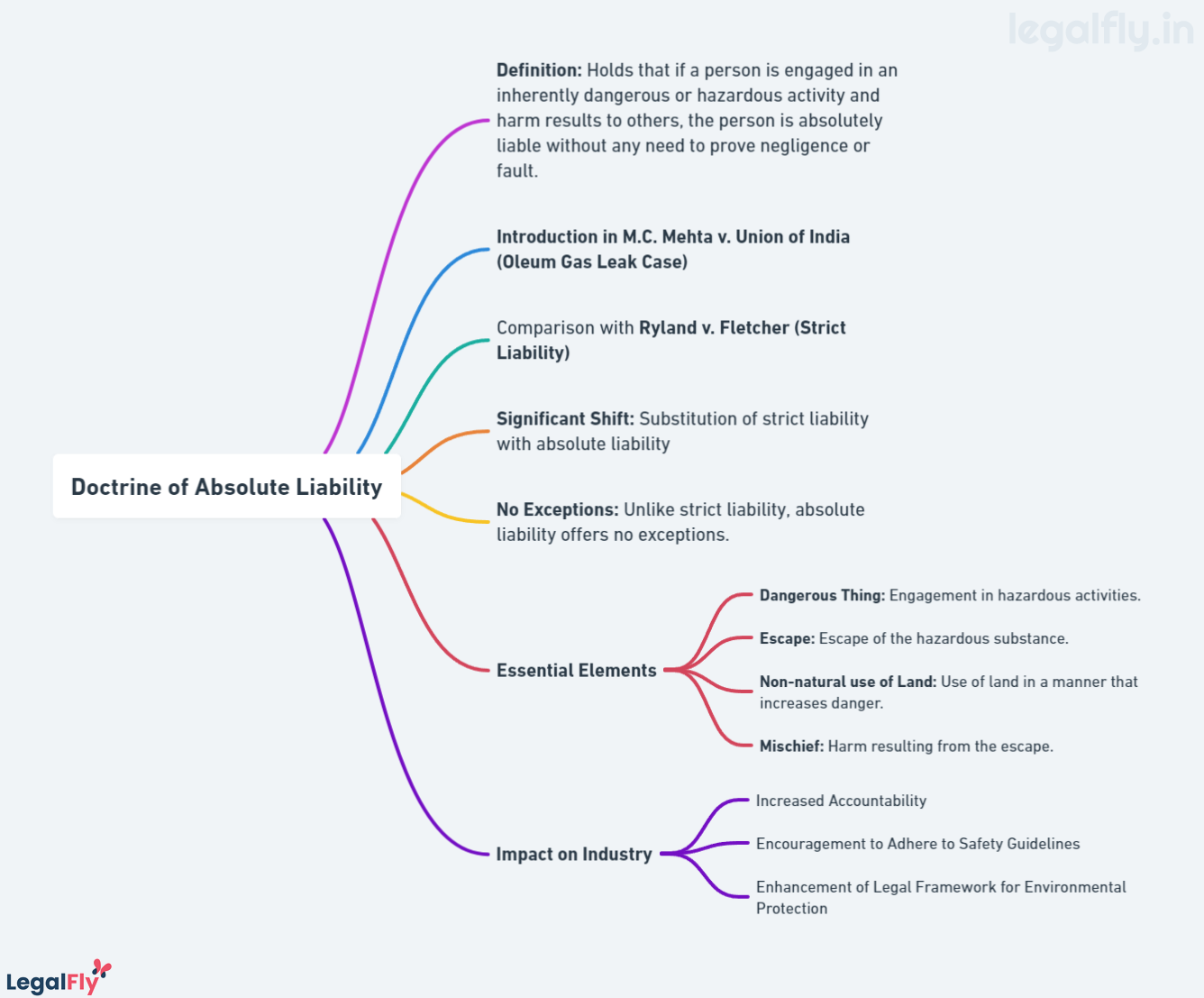
This is the heart of the case. Bhagwati C.J. held that an enterprise engaged in a hazardous or inherently dangerous activity owes an absolute and non-delegable duty to the community to ensure that no harm results. If harm does result — for example, from the escape of a toxic gas — the enterprise is absolutely liable to compensate those affected, and no exceptions apply. The enterprise cannot plead act of God, act of a stranger, or the victim's fault. The rationale: a business that profits from a dangerous activity must absorb the cost of any harm it causes as part of the overheads of doing that business.
| Feature | Strict Liability (Rylands v. Fletcher, 1868) | Absolute Liability (Oleum, 1987) |
|---|---|---|
| Trigger | Non-natural use of land + escape of a dangerous thing | Any hazardous or inherently dangerous activity |
| Exceptions | Several (act of God, act of a stranger, plaintiff's fault, consent, statutory authority) | None |
| Damages | Compensatory | Correlated to the enterprise's size — deterrent |
| Basis | English common law | Indian conditions; enterprise must bear the cost of the risk it creates |
The principle is explained in detail on our absolute liability page, and contrasted with the older rule on the Rylands v. Fletcher page.
Epistolary Jurisdiction and Article 32
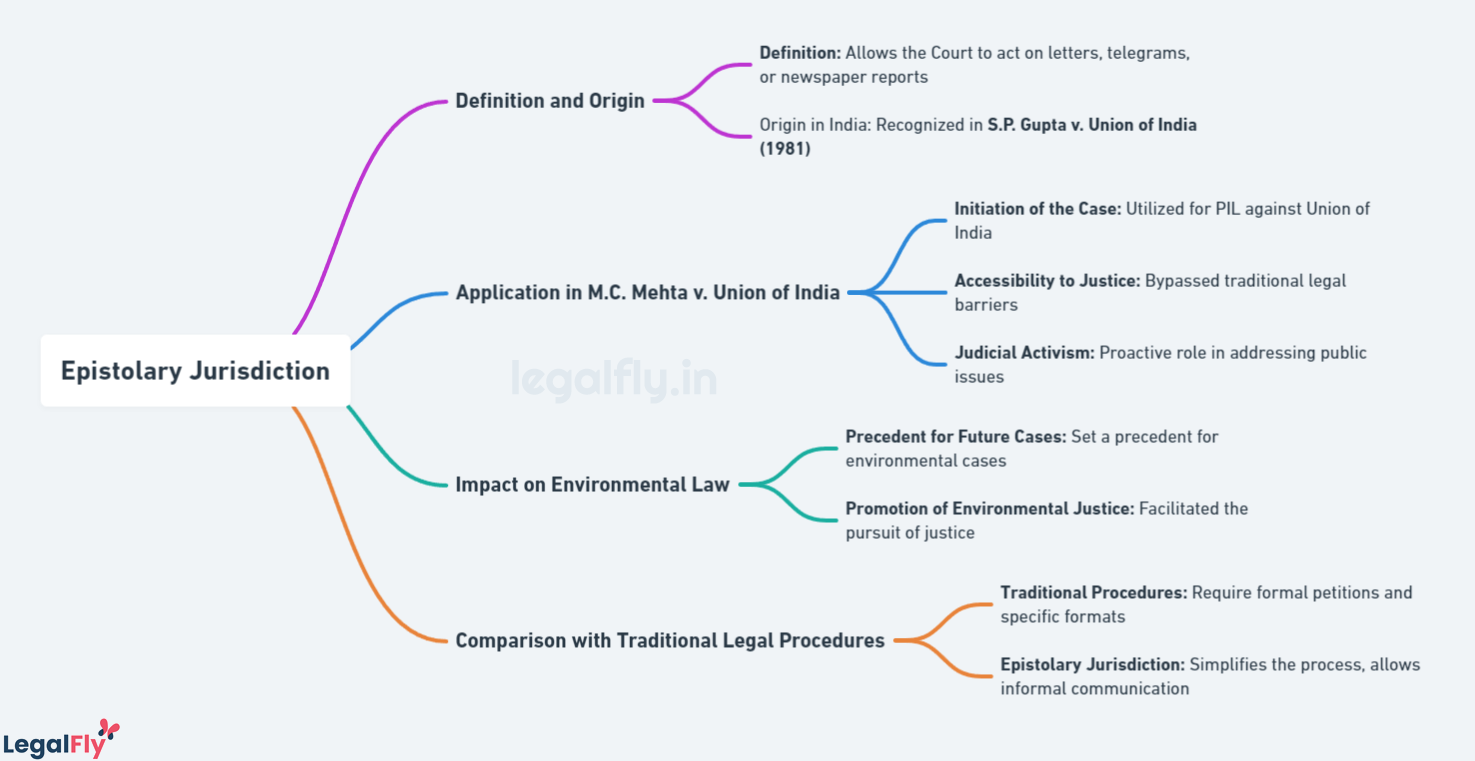
The case is also a landmark for procedure. The Court reaffirmed its broad approach to public interest litigation and epistolary jurisdiction (treating even a letter as a petition), and held that Article 32 is not merely a right to approach the Court but a power in the Court to devise whatever remedy — including monetary compensation — is needed to make fundamental rights real. This freed constitutional remedies from the slow, fault-based path of an ordinary civil suit.
Article 21 and the Right to a Healthy Environment
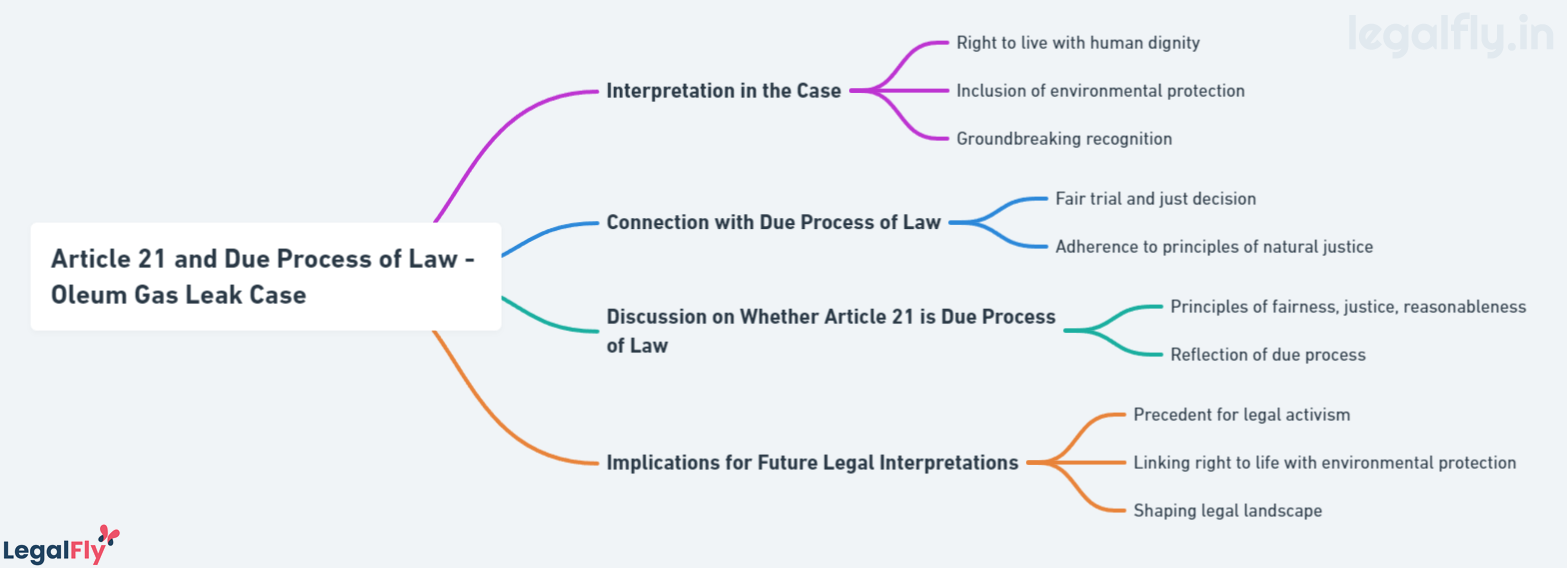
The M.C. Mehta litigation is part of the line of cases that read the right to life under Article 21 to include the right to live in a healthy, pollution-free environment. By tying environmental harm to a fundamental right and providing a fast constitutional remedy for its breach, the case helped lay the foundation of modern Indian environmental jurisprudence.
Public Liability Insurance Act, 1991
The recognition that victims of industrial accidents need immediate relief — without waiting years to prove fault — influenced later legislation. The Public Liability Insurance Act, 1991 created a no-fault liability scheme requiring hazardous-industry operators to take out insurance so that those harmed by an accident receive prompt, specified compensation, independent of any court finding of negligence.
Later Application of the Doctrine
The absolute-liability principle did not remain confined to Oleum. It was squarely applied and affirmed in Indian Council for Enviro-Legal Action v. Union of India (the Bichhri case, 1996), where polluting chemical units were held absolutely liable for environmental damage. More recently, in the Visakhapatnam (LG Polymers) styrene gas leak of May 2020, the National Green Tribunal invoked the Oleum doctrine to hold the company absolutely liable and order substantial interim compensation — a vivid demonstration that the rule Bhagwati C.J. laid down in 1986 remains the governing standard.
Oleum vs. Bhopal: A Common Confusion
It is essential to keep the two great gas-leak cases apart. The Oleum case is the Shriram/DCM leak in Delhi (1985), and it is where absolute liability was born. The Bhopal disaster was the far deadlier 1984 leak of methyl isocyanate from the Union Carbide plant in Madhya Pradesh, which ended in a 1989 settlement of US$470 million. The Oleum doctrine was developed in Bhopal's shadow, but the two are distinct cases with different parties and outcomes.
Conclusion
M.C. Mehta v. Union of India (Oleum Gas Leak) reshaped Indian law in a single judgment. By replacing strict liability with absolute liability, tying damages to an enterprise's capacity to pay, and empowering the Supreme Court to award compensation under Article 32, it gave victims of industrial hazards a powerful, fault-free remedy and put the cost of dangerous activity squarely on those who profit from it. Decades later — from Bichhri to Visakhapatnam — it remains the cornerstone of India's law on hazardous enterprise and the environment.